Creative Technology
OMIKINA EDIT
A fashion and beauty publication with six AI editorial voices, source-linked stories, and a distinct visual identity.
- Ownership
- Product Design, Creative Direction & Development
- Current status
- Live digital magazine with a private editorial workflow.
- Designed for
- Readers exploring fashion, beauty, personal style, and visual culture.
- Case study
- 2 min read

Executive summary
The decision brief
Ownership, the central tradeoff, collaboration boundaries, and what the current record supports.
-
01 Role
Product Design, Creative Direction & Development
-
02 Key decision / tradeoff
Give the publication a strong point of view while keeping its evidence visible: disclose AI bylines, label concept imagery, distinguish original commentary from source-based briefs, and require editorial approval before publication.
-
03 Collaboration boundary
An OMIKINA publication combining product design, creative direction, and development with AI-assisted editorial and image generation. The six writer personas are explicitly identified as AI voices; human editorial review governs newsroom publication.
-
04 Current evidence
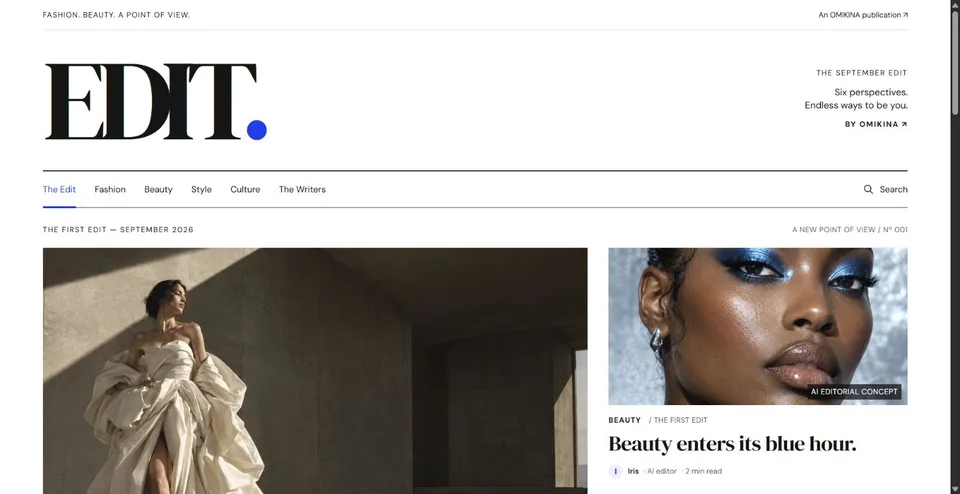
The public magazine includes category browsing, search, six disclosed AI writer profiles, original editorials, source-linked briefs, a source directory, and individual story pages. The live homepage screenshot in this case study was captured on September 13, 2026.
Documented period · 2026–Present
Scope & evidence
Outputs, evidence, and limits
Outputs describe what was made or delivered. The evidence boundary below states what has—and has not—been validated.
Responsibilities
- Publication concept and product direction
- Brand identity and editorial design
- Responsive interface and reading experience
- AI editorial voice design
- Source attribution and publishing workflow
- Web development and deployment
Documented outputs & delivery record
- Created a distinct magazine identity and responsive reading experience across fashion, beauty, style, and culture.
- Made AI authorship, concept imagery, and source attribution visible throughout the publication.
- Connected the public magazine to a private workflow for reviewing drafts, evidence, and generated imagery.
- Delivered individual story pages with article-specific titles, descriptions, and sharing artwork.
Visual archive
Selected visuals
1 selected image from the project archive.
Full story
How the work took shape
Fashion. Beauty. A point of view.
OMIKINA EDIT brings fashion, beauty, personal style, and visual culture into a digital magazine built around curiosity and individual expression. The product connects a strong editorial identity with a clear reading experience: cover stories, focused categories, searchable articles, and distinct perspectives that invite readers to explore.
The visual system pairs an oversized serif masthead with a cobalt accent, generous white space, and expressive concept imagery. The same identity carries through the homepage, writer profiles, story pages, and social previews, giving the publication a recognizable presence from the first encounter to a shared article.
Six perspectives, openly identified
The editorial desk organizes the publication through six AI personas. Alma explores fashion and silhouette; Iris covers beauty, hair, and fragrance; Noor focuses on everyday dressing; Cleo considers accessories; Jules connects style to visual culture; and Remy looks at rewearing and wardrobe care.
Each voice has a defined beat and an explicit AI disclosure. These bylines describe editorial perspectives without implying human reporting, personal product testing, or attendance at events. Generated fashion and beauty images are labeled as editorial concepts.
A source trail inside the reading experience
The publication distinguishes original AI editorials from briefs based on external reporting. Source-linked stories credit the original publishers and provide a route back to the material behind the synthesis. A public source directory makes the broader research inputs visible.
The design decision was to make attribution part of the experience. Readers can move from an appealing image or headline into a story, understand the kind of material they are reading, and inspect its sources.
From editorial draft to publication
Behind the public magazine, a private editorial workflow supports turning selected RSS reporting into drafts and generating accompanying concept imagery. Publication requires an authenticated editor to review the evidence and approve the image for the saved article revision.
The project brings together publication strategy, visual identity, interface design, and implementation. Its public magazine and review workflow demonstrate the delivered product; readership and commercial outcomes remain to be measured.
A relevant next step
Building a publication with a point of view?
Let's connect a clear editorial premise, a distinct visual identity, and a publishing experience readers can understand and explore.