AI Intelligence Platform
OMIKINA After Hours
A visual entertainment publication connecting source-grounded film discovery with an editorial fanclub.
- Ownership
- Founder, Product Designer & Creative Director
- Current status
- Public entertainment publication and unofficial Mia Goth fanclub, live at after-hours.omikina.com.
- Designed for
- Film fans looking for a specific viewing choice, a career story, or a visual archive with sources they can inspect.
- Case study
- 3 min read
Executive summary
The decision brief
Ownership, the central tradeoff, collaboration boundaries, and what the current record supports.
-
01 Role
Founder, Product Designer & Creative Director
-
02 Key decision / tradeoff
Build around a reader’s next choice: find tonight’s film, explore a career beginning, or follow an artist’s work. Give each reading path a source trail and a distinct visual identity.
-
03 Collaboration boundary
John N. Farmer directed the product, editorial structure, visual system, and implementation using AI-assisted development and bounded research, writing, and review agents. The three AI journalist personas are disclosed fictional characters, not human employees. Independent agent review does not establish human editorial review.
-
04 Current evidence
The public homepage, discovery pages, Tonight chooser, Started in Horror desk, Mia Goth fanclub, individual stories, sources, and image credits were checked on October 9, 2026. Daily entertainment and weekly fanclub maintenance are configured; the first unattended scheduled success has not been observed.
Documented period · 2026–Present
Scope & evidence
Outputs, evidence, and limits
Outputs describe what was made or delivered. The evidence boundary below states what has—and has not—been validated.
Responsibilities
- Product concept and editorial direction
- Entertainment taxonomy and discovery paths
- Visual identity and responsive magazine design
- Source-grounded writing and review workflows
- Disclosed AI journalist desks
- Licensed photography and image-credit records
- Crawlable story pages and sharing metadata
- Production release and browser verification
Documented outputs & delivery record
- Launched a public horror, sci-fi, and fantasy publication with original source-linked features.
- Built Tonight, a mood-based film chooser, and Started in Horror, a career-origins desk.
- Created an unofficial Mia Goth fanclub with a visual career archive, film records, official announcements, interviews, and credited photographs.
- Separated linked publisher updates from original editorial features and identified synthetic AI journalist personas.
Visual archive
Selected visuals
1 selected image from the project archive.
Full story
How the work took shape
A reason to open the page
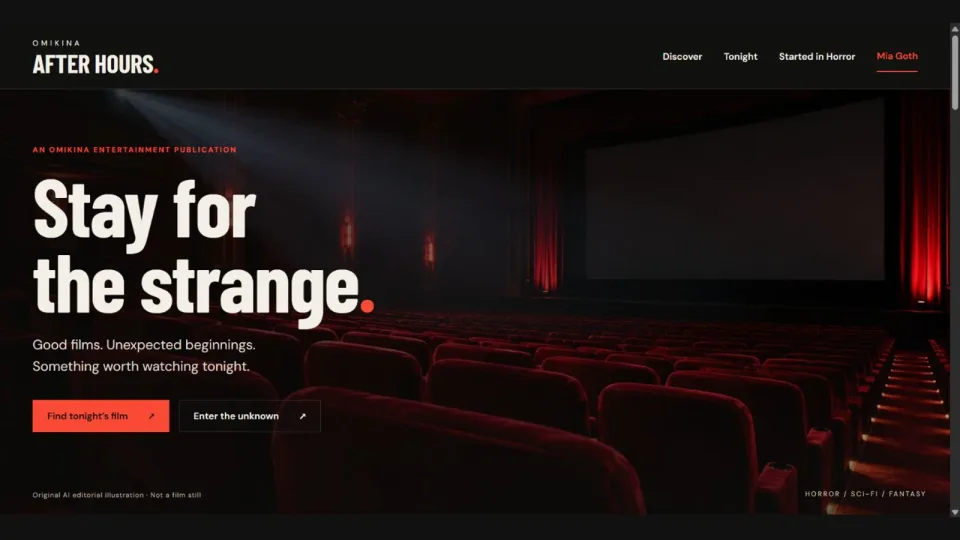
I built After Hours around three reader intentions: discover something unfamiliar, decide what to watch tonight, and follow the work of a performer. Horror, sci-fi, and fantasy provide a focused editorial territory with room for surprising career stories and strong visual direction.
The product adapts OMIKINA’s source-grounded publishing approach to entertainment. Its interface uses cinematic images, large typography, and distinct reading paths, while original features remain separate from incoming publisher headlines.
From discovery to a viewing decision
Discover groups original features by genre and angle. Tonight offers a small set of film choices by mood, with release year and running time visible. It helps a reader choose a viewing commitment without implying that regional streaming availability has been verified.
Started in Horror follows actors and actresses who worked in the genre early in their careers. The source trail distinguishes a feature-film debut from a first acting job or an early supporting credit. Those distinctions make the story more useful than a list of famous names.
A fanclub designed as an editorial archive
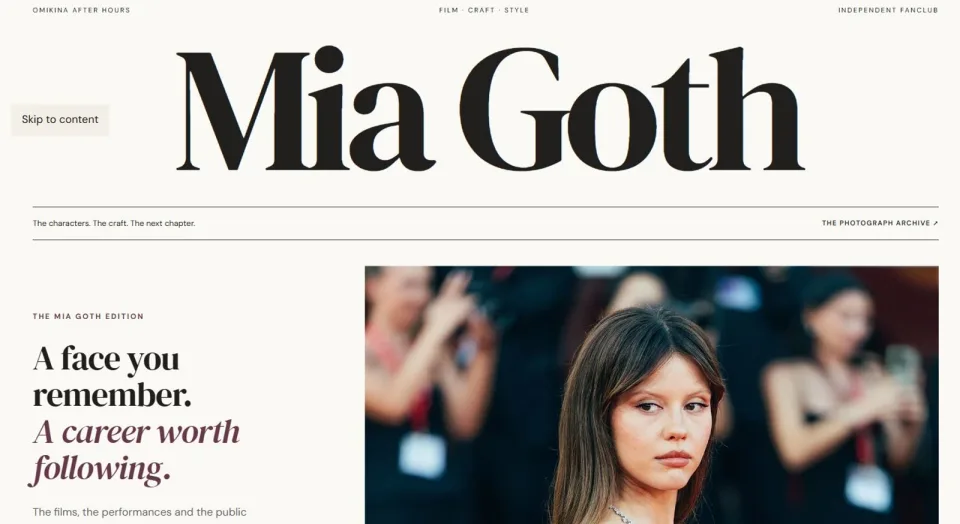
The Mia Goth fanclub has a fashion magazine treatment, with large credited photographs and a structured record of selected films, official announcements, interviews, and career features. Readers can move between the visual archive and the evidence behind an update.
The fanclub is unofficial. It does not speak for Mia Goth or her representatives, and linked official announcements remain attributable to their original publishers. The photographs retain source and license credits; generated illustrations are identified separately from documentary images and film stills.
The portfolio screenshots reproduce the live product interface. The photograph credits and original license links remain available in the publication’s image-credit register.
A newsroom that identifies its tools
Three disclosed fictional AI journalist personas organize the coverage. Their presence gives the desks recognizable editorial identities without presenting generated characters as human reporters, interviews, or field reporting.
Research and writing agents work from cited sources. Independent agent review checks the candidate, but human judgment remains essential for consequential claims. Published features identify AI assistance and recorded review status so readers can understand what work occurred.
Delivery and the next learning loop
The public site includes individual story pages, discovery navigation, a source register, image credits, a sitemap, sharing metadata, and consent-based analytics. Its current deployment was checked on the custom domain, including the homepage and fanclub. The configured daily entertainment and weekly Mia Goth maintenance still need an observed scheduled success before being described as unattended operation.
The launch demonstrates a delivered publication and its reading paths. The next useful evidence is whether people find a film, follow a citation, and return for a career update. Publishing volume alone does not establish reader value or commercial demand.
A relevant next step
Building a publication people have a reason to revisit?
John can connect editorial judgment, visual identity, source modeling, AI workflow integration, and implementation into a focused public product.