Human-Centered Health Product
Signal & Scope
Medicine, mapped as it moves.
- Ownership
- Product Strategy, UX/UI Design & Development
- Current status
- Live current-awareness workspace. Scope is a taxonomy preview; clinically reviewed reference content is a future layer.
- Designed for
- Clinicians, healthcare educators, researchers, students, and operations teams keeping up with changes across medicine.
- Case study
- 3 min read
Executive summary
The decision brief
Ownership, the central tradeoff, collaboration boundaries, and what the current record supports.
-
01 Role
Product Strategy, UX/UI Design & Development
-
02 Key decision / tradeoff
Keep the source record at the center of the experience. Help readers discover and organize information while making its provenance, freshness, and limits visible.
-
03 Collaboration boundary
An OMIKINA product bringing together John's product direction, information architecture, interface design, and AI-assisted development.
-
04 Current evidence
The public workspace, live feed, and current implementation were checked on September 14, 2026. The product screenshots document that visit; source counts and records change as the feed refreshes.
Documented period · 2026–Present
Scope & evidence
Outputs, evidence, and limits
Outputs describe what was made or delivered. The evidence boundary below states what has—and has not—been validated.
Responsibilities
- Product concept and information architecture
- Brand identity and responsive interface
- Source desks, search, and discovery workflows
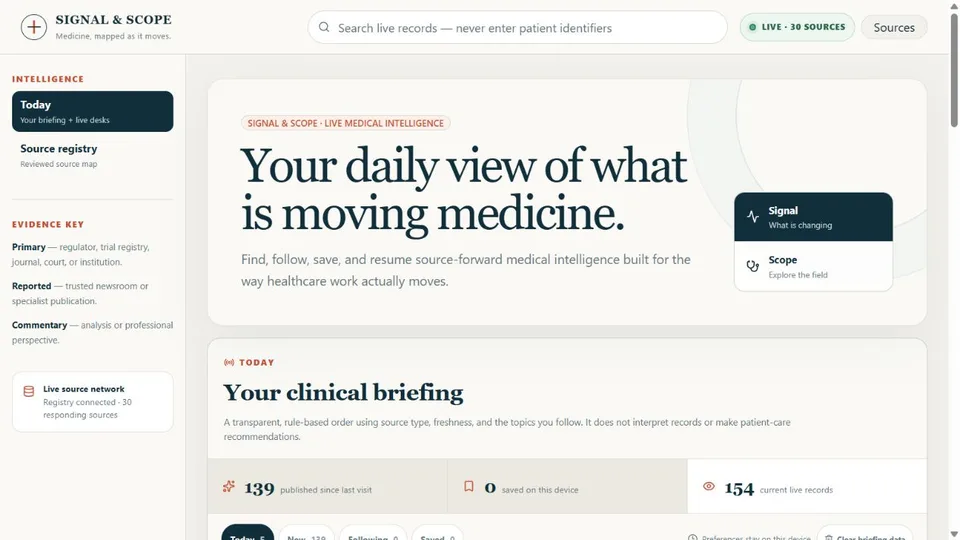
- Daily briefing and reader return experience
- Source provenance and refresh-state design
- Web development and deployment
Documented outputs & delivery record
- Launched four live source desks spanning research, regulation, clinical practice, and healthcare industry developments.
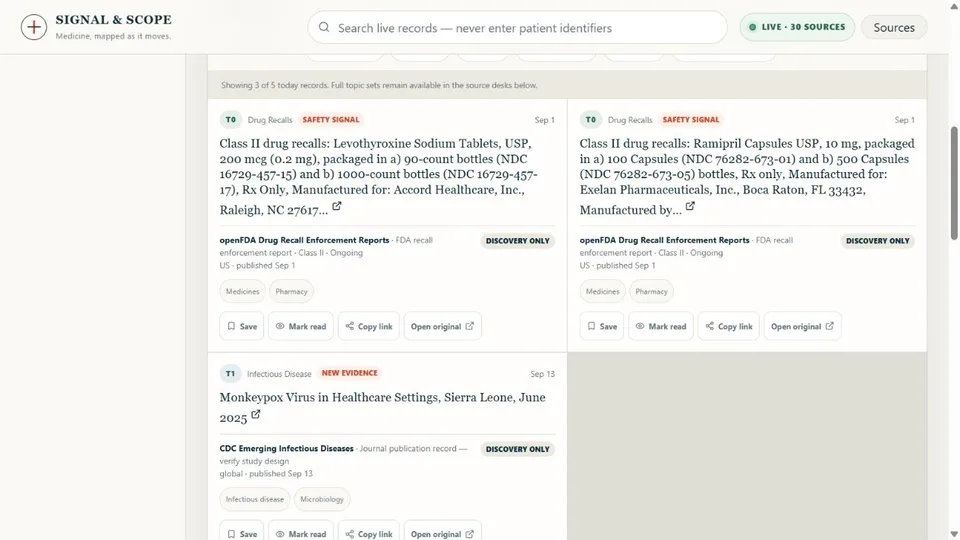
- Kept original-source links, evidence states, publication dates, and jurisdiction visible alongside each record.
- Built Today, New, Following, and Saved views with preferences and reading progress stored on the reader's device.
- Made source availability and refresh health visible, including incomplete or unavailable coverage.
Visual archive
Selected visuals
2 selected images from the project archive.
Full story
How the work took shape
A clearer way into a moving field
Keeping up with medicine means moving between journals, regulators, professional organizations, hospital newsrooms, and specialist publications. Each has its own vocabulary and publishing rhythm. Finding an update is only the beginning; readers also need to understand where it came from and how to return to it.
Signal & Scope organizes that work into a single source-forward workspace. The product connects information architecture, an editorial visual identity, and a practical reading workflow around a simple question: what has changed, and where can I verify it?
Four desks, one source language
Research, Regulation, Practice, and Industry provide four entry points into the live feed. Readers can search across records or follow topics such as cardiovascular medicine, nursing, medicines, and imaging and labs.
Each record carries context with it: the originating publication or institution, an evidence-state label, publication date, jurisdiction, and a link to the original. A regulatory notice, a research record, and a reported article retain their different identities. The interface makes those distinctions part of reading instead of hiding them behind a headline.
The source network also has a visible status. Scheduled refreshes update the cached feed, while availability labels make incomplete coverage legible. The product can acknowledge a missing source without filling the gap with invented information.
Designed for the next visit
The daily briefing uses a transparent order based on source type, freshness, and followed topics. Today, New, Following, and Saved views give readers different ways to enter the same collection. Save, mark-read, resume, and copy-link controls make it easier to pick up an interrupted reading session.
Preferences and reading progress stay on the reader’s device. That choice supports a lightweight return experience without presenting local saves as synchronized account data. The interface explains where that state lives and provides a way to clear it.
An editorial identity with useful restraint
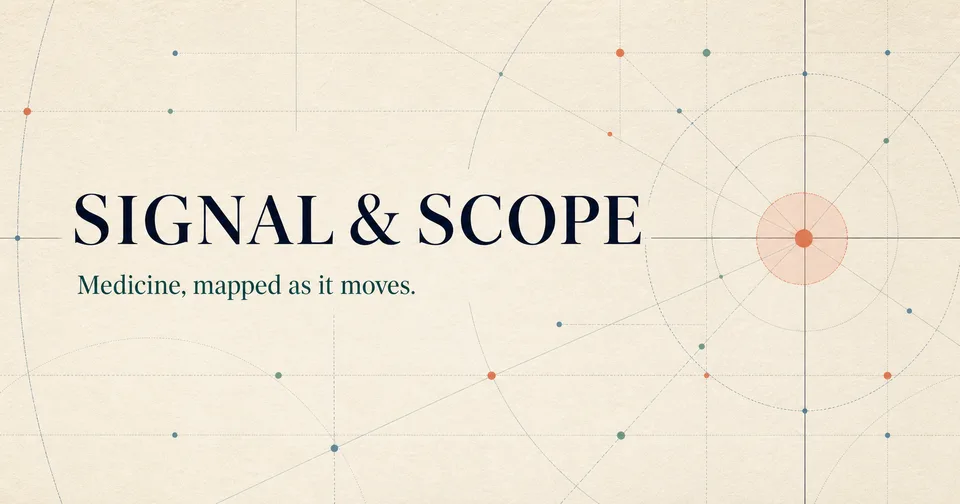
Warm paper, deep navy, teal, and small coral accents give the workspace the character of an editorial desk. Serif headlines distinguish the stories; quieter interface typography carries dates, labels, and controls. The circular scope mark and fine chart geometry connect the identity to observation and navigation.
The visual hierarchy gives the reader a route from a broad daily view to a specific source. Status and provenance remain close to the content, where they can inform the decision to open it.
A live product with a defined scope
Signal & Scope is live at signalandscope.org. Its current release supports medical awareness and source discovery. It does not interpret individual patient information or provide patient-care recommendations.
The Signal view contains the working feed and reader tools. Scope previews a taxonomy for exploring the field; licensed, clinically reviewed reference material remains a future layer. This distinction keeps the current product understandable while leaving room for a carefully developed reference experience.
A relevant next step
Making complex information easier to use?
Let's build an experience that helps people find their way, understand the source, and return to what matters.